
Physical Fitness for Army: The Complete Guide Every Aspiring Cadet Must Read
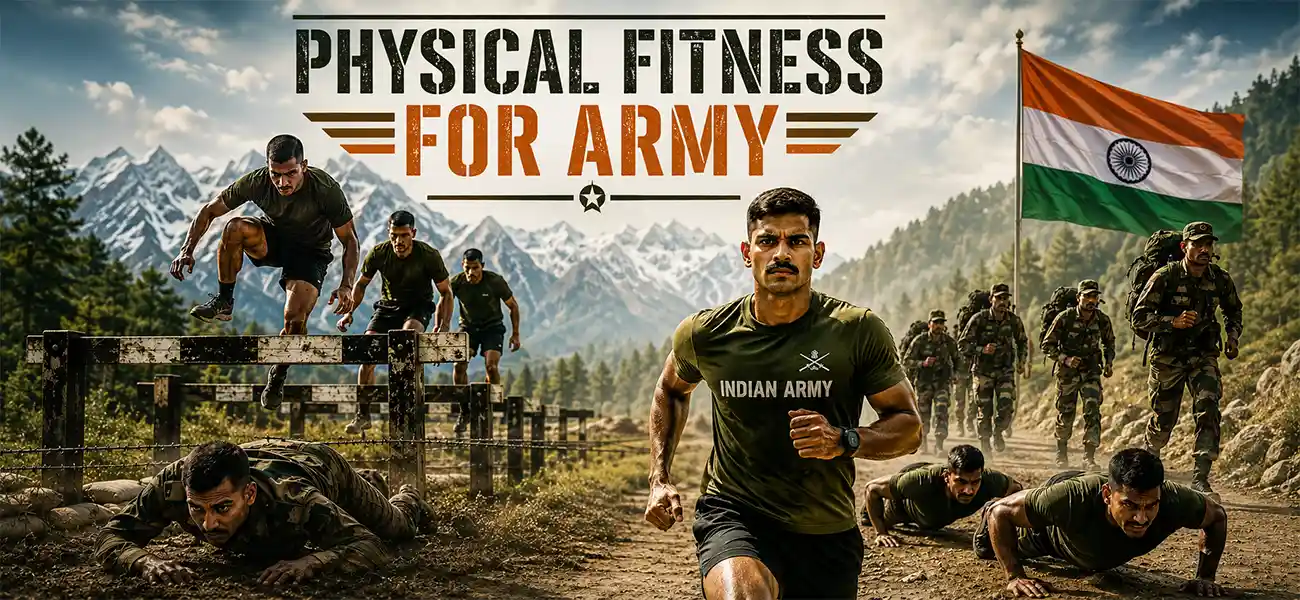
In the rigorous landscape of Indian defence services, physical fitness for army stands as the cornerstone of success, resilience, and leadership. For young aspirants dreaming of joining the Indian Armed Forces through prestigious entry points like RIMC and Sainik Schools, developing peak physical condition is non-negotiable. It’s the difference between merely clearing an entrance and thriving through years of demanding military training.
This detailed guide dives deep into every facet of physical fitness for army preparation, offering actionable insights, proven strategies, and holistic approaches tailored for Indian defence aspirants.
The Critical Role of Physical Fitness in Army Life
The Indian Army demands officers who can lead from the front in extreme conditions — whether scaling Himalayan peaks, navigating deserts, or executing swift counter-terrorism operations. Physical fitness for army personnel translates into enhanced endurance, injury prevention, mental sharpness under pressure, and overall operational readiness.
Key benefits include:
- Higher selection rates in competitive exams and medical boards.
- Better performance in obstacle courses, marches, and field training.
- Improved leadership qualities forged through disciplined routines.
- Long-term health advantages that support a full career in uniform.
Without a strong foundation, even academically brilliant candidates often fall short during physical efficiency tests or initial training phases.
The Physical Fitness Standards Set by the Indian Army
Candidates appearing for army entries — whether through NDA, Sainik School, RIMC, or direct army recruitment — are assessed on well-defined physical parameters. While exact standards vary slightly by age group and entry type, the core tests generally include:
1. 1.6 km run
A timed run that tests basic cardiovascular endurance. Faster timings often fetch bonus points in several recruitment processes.
2. Push-Ups and Sit-Ups
These measure upper body and core strength — both essential for carrying equipment and weapons.
3. Pull-Ups (Chin-Ups)
A key test of upper body strength, often a deciding factor in physical efficiency tests.
4. Long Jump and High Jump
These assess explosive leg strength and coordination.
5. Balance Beam / Zig-Zag Balance
Used especially in Sainik School and RIMC selection to test coordination and body control — critical skills for a future soldier.
Meeting or exceeding these standards isn’t just about passing a test — it reflects the level of physical fitness for army life that recruits are expected to sustain daily, for years.
Why Physical Fitness for Army Careers Must Start in Childhood
Here’s a fact most parents don’t realise: cardiovascular capacity, bone density, and muscular coordination developed between ages 10-16 create the base that determines performance in adulthood. A child who grows up sedentary and starts training at 17 or 18 is already playing catch-up.
This is precisely why forward-thinking institutions integrate physical fitness for army preparation into the daily school routine — not as an occasional PT period, but as a disciplined, structured, everyday practice involving:
- Early morning physical training (PT)
- Structured running and endurance drills
- Strength training appropriate for growing bodies
- Yoga and flexibility sessions
- Sports and games for agility and team spirit
- Swimming, where facilities permit
Diet and Recovery: The Silent Half of Physical Fitness for Army Training
Training alone doesn’t build a soldier’s body — nutrition and recovery do the rest. A well-planned fitness regime for army aspirants typically includes:
- High-protein meals to support muscle recovery and growth
- Complex carbohydrates for sustained energy during long training sessions
- Adequate hydration, especially important during outdoor drills
- 7-8 hours of sleep, non-negotiable for growing children and teenagers
- Injury prevention practices like warm-ups, cool-downs, and stretching
Cadets who ignore this half of the equation often plateau — or worse, get injured — regardless of how hard they train.
Mental Fitness: The Often-Ignored Pillar of Physical Fitness for Army Life
Physical fitness for army roles isn’t just about the body holding up — it’s about the mind refusing to quit when the body wants to. Discipline, resilience, time management, and the ability to perform under pressure are trained alongside physical drills in serious army-preparatory institutions. This is why a genuine army-fitness culture always pairs PT with:
- Daily discipline and routine
- Leadership and teamwork activities
- Exposure to controlled stress situations
- Regular assessment and honest feedback
How RIMC and Sainik School Entrance Exams Test Physical Fitness
Both the Rashtriya Indian Military College (RIMC) and Sainik Schools place heavy emphasis on physical readiness alongside academics. Candidates go through:
- A written examination
- An interview and psychological assessment
- A thorough medical examination
- Physical fitness and coordination tests
A student who is academically brilliant but physically underprepared often struggles at this stage. That’s why serious aspirants need guided, consistent, age-appropriate physical fitness for army entrance preparation — not last-minute cramming.
Common Mistakes Aspirants Make While Training for Army Fitness
- Overtraining without recovery – leads to burnout and injuries
- Ignoring flexibility work – increases risk of muscle strain
- Copying adult gym routines – unsuitable for growing bodies
- Focusing only on running, ignoring strength – creates an imbalance
- No professional guidance – self-training without expert supervision often builds incorrect form and habits
This is where trained coaches and a structured environment make all the difference between random effort and real results.
Building a Weekly Physical Fitness for Army Preparation Routine (Sample Structure)
| Day | Focus Area |
|---|---|
| Monday | Endurance run + core strength |
| Tuesday | Push-ups, pull-ups, upper body strength |
| Wednesday | Agility drills + obstacle practice |
| Thursday | Flexibility, yoga, and recovery |
| Friday | Long jump, high jump, explosive strength |
| Saturday | Sports/games for coordination and team spirit |
| Sunday | Light activity and rest |
A routine like this, followed consistently under expert supervision, builds the kind of physical fitness for army careers that lasts — not a temporary spike before an exam.
Physical Fitness for Army Success Is a Journey, Not a Sprint
Preparing the body and mind for a career in the armed forces is a long-term commitment that demands the right guidance, environment, and consistency. It’s not about last-minute preparation — it’s about building habits, discipline, and strength year after year, right from school life.
This is where Indian Defence School stands apart. Recognised as one of the best Army Boarding Schools in India, Indian Defence School offers specialised, structured coaching for RIMC and Sainik School entrance preparation, combining rigorous physical training with strong academics, discipline, and mentorship from experienced instructors. From early-morning PT sessions to personalised fitness assessments, every element of the routine at Indian Defence School is designed around one goal — shaping confident, capable, and physically fit future officers of the Indian Armed Forces.
If you’re a parent or student serious about a future in the army, building physical fitness for army readiness the right way starts with choosing the right environment — and Indian Defence School is built to be exactly that.